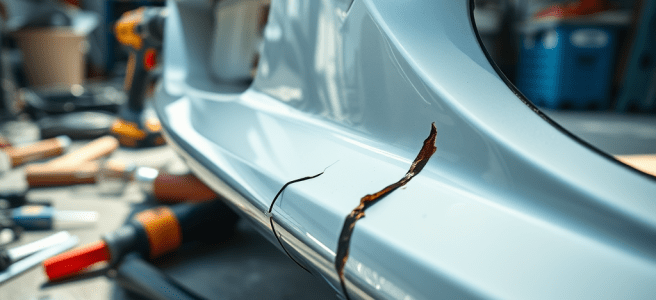
Well, the front bumper of our civic is cracked and I plan to drift stitch that bitch so she can stay in place.
Here’s the guide I’m using:
Required Materials
- Plastic zip ties (several, preferably in a color matching your bumper)
- Electric drill with 3/16″ or 1/4″ drill bit
- Safety glasses
- Work gloves
- Marker (this is a good idea)
- Ruler
- Scissors or wire cutters
- Sandpaper (optional)
Safety Precautions
- Wear safety glasses to protect from plastic debris
- Put on work gloves to avoid cuts from sharp edges
- Work in a well-ventilated area
- Park the car on a level surface with parking brake engaged
Step-by-Step Instructions
- Clean and Prepare
- Clean the cracked area thoroughly with soap and water
- Dry completely with a clean cloth
- Mark drill points along both sides of the crack, spacing them about 1 inch apart** (see stitch patterns section)
- Drill Holes
- Put on safety glasses and gloves
- Using the drill with a 3/16″ or 1/4″ bit, carefully drill holes at your marked points
- Drill perpendicular to the surface for clean holes
- Keep holes at least 1/2 inch from the edge of the crack
- Insert Zip Ties
- Insert zip ties from the back of the bumper whenever possible
- Thread each tie through adjacent holes, creating a “stitch” pattern
- Pull each tie snug but not too tight to avoid further cracking
- Continue this pattern along the entire length of the crack
- Secure and Trim
- Tighten all zip ties firmly
- Cut off excess zip tie length with scissors or wire cutters
- Leave about 1/4 inch of the tail to prevent the tie from pulling through
- If desired, sand down the cut ends for a smoother finish
Important Notes
- This is a temporary repair only
- Schedule a professional repair as soon as possible (HA)
- The repair may affect sensors or parking systems near the damaged area
- Check local regulations regarding bumper repair requirements
- Monitor the repair regularly for any sign of further cracking
Stitch Patterns
I-Pattern (Straight Stitch)
Best for: Straight-line cracks with minimal stress
Advantages:
- Requires fewer holes
- Simpler to execute
- Less noticeable
- Better for thin cracks
- Pattern: | | | | |
- Spacing: 1 inch between each vertical stitch
X-Pattern (Cross Stitch)
Best for: Wider cracks or areas under high stress
Advantages:
- Stronger hold
- Better distribution of forces
- More resistant to further tearing
- Ideal for curved areas
- Pattern: X X X X
- Spacing: 1-1.5 inches between each X
Step-by-Step Instructions
- Choose Your Pattern
- For narrow, straight cracks: Use I-Pattern
- For wide cracks or curved areas: Use X-Pattern
- For very severe damage: Combine both patterns for maximum strength
- Mark Drill Points
- For I-Pattern: Mark two parallel lines of holes, one on each side of crack
- For X-Pattern: Mark holes in diamond formation, alternating sides
- Drilling Holes
- For I-Pattern: Drill straight across from each other
- For X-Pattern: Drill in diamond formation, keeping holes 1/2 inch from crack
- Threading Zip Ties
- I-Pattern: Thread straight across
- X-Pattern: Cross ties diagonally to form X shape
Tips for Stitch Pattern Selection
Use I-Pattern when:
- Crack is straight and clean
- Bumper material is thin
- Aesthetics are a priority
- Minimal stress on the area
Use X-Pattern when:
- Crack is jagged or wide
- Area experiences high stress
- Maximum strength is needed
- Crack is on a curve
Regular Maintenance
- Inspect the zip ties weekly for loosening and the crack for girth
- Avoid high-pressure car washes until proper repairs are made

 Joe DiAndrea