If you’re still studying like you did in high school – cramming the night before an exam, highlighting entire textbooks, and hoping for some miracle of retention – you’re probably doing it wrong.
Maybe even super wrong.
In the course learning how to learn on coursera, one of the most taken, and highly rated courses on the platform – these memory techniques aren’t just academic mumbo-jumbo. They’re practical brain hacks that can turn you from a forgetful mess into someone who actually remembers what they learn.
And with this new career switch? I for sure need new ways to actually remember what I am learning.
Ditch Cramming: Spaced Repetition is Your New Best Friend
Forget everything you know about last-minute study marathons. Your brain isn’t a storage unit – it’s a living, dynamic system that needs strategic maintenance.
Spaced repetition is like going to the gym for your memory. Instead of one brutal workout that leaves you with your legs feeling like noodles, you’re doing consistent, targeted training.
Review your material after one day, then three days, then a week. Each time you retrieve that information, you’re basically doing bicep curls for your neural pathways.
The result? Information that actually sticks instead of evaporating the moment you walk out of the exam room.
This is a big difference in learning to learn and learning to pass a test.
Active Recall: Stop Passive Reading, Start Active Learning
Here’s a harsh truth: passively reading your notes is about as effective as trying to get fit by watching workout videos while eating chips.
Active recall means forcing your brain to work. Close your notes and try to explain the concept out loud. Use flashcards. Teach an imaginary student. Basically, put your brain through a workout and make it sweat.
Why? Because retrieving information is harder than reading it. And hard is good. Hard means you’re actually learning. Doesn’t pressure create diamonds? Fuck yeah.
The Memory Palace: Your Brain’s Secret Weapon
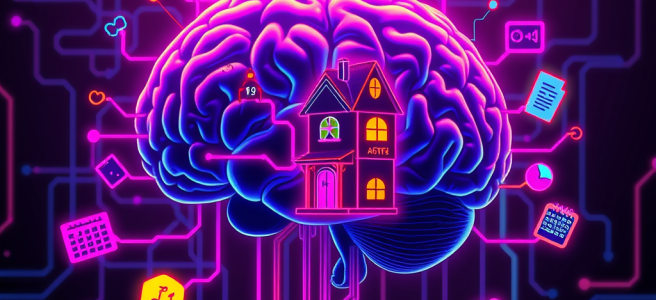
This technique is basically mental parkour for memory. You associate information with specific locations in a familiar place – like your home or your commute route.
Want to remember a list of historical dates? Imagine Napoleon standing in your kitchen, wearing a ridiculous hat and doing dishes. Want to memorize chemical formulas? Picture Einstein taking a dump in your bathroom, scribbling equations on the wall.
The more bizarre the mental image, the better it sticks. Our brains evolved to remember visual, spatial, and emotional information far better than abstract concepts.
Chunking: Breaking Information into Bite-Sized Mental Snacks
Your working memory is like a tiny apartment with limited space and chunking is how you maximize that space.
Instead of trying to cram every single detail, group information into meaningful clusters. It’s like decluttering a messy closet by making a “give pile, trash pile, and keep pile.”
Suddenly, everything becomes more manageable. You have piles to put together, not one big mess you’re trying to clean up.
Focus intensely. Understand the core principles. Practice until these chunks become automatic. Over time, you’ll build a mental library of knowledge that you can access faster than Google.
Sleep: The Ultimate Memory Hack
Here’s something most productivity bros ignore: sleep isn’t for the weak. It’s when your brain does its most important maintenance work.
During sleep, your brain is like a night shift worker, sorting through the day’s information.
It strengthens important neural connections, prunes away the useless stuff, and basically turns your scattered learning into a coherent knowledge system.
Study something complex right before bed via pen and paper. For the love of god, put away the electronics, the blue light, all of that.
Let your brain do its thing.
The Bottom Line
These aren’t magic tricks. They’re scientifically-proven methods that work with your brain’s natural learning processes.
Stop treating your memory like a passive storage device. Start treating it like a muscle you can train, a system you can optimize.
Will it take effort? Absolutely. But anything worth doing requires work.
Plus, the ability to actually remember and use the information we learn is worth every ounce of that effort.
Are you ready to upgrade your brain’s operating system?
I sure am.
Let’s fucking go

 Joe DiAndrea